
Drum pattern building in Ableton Live
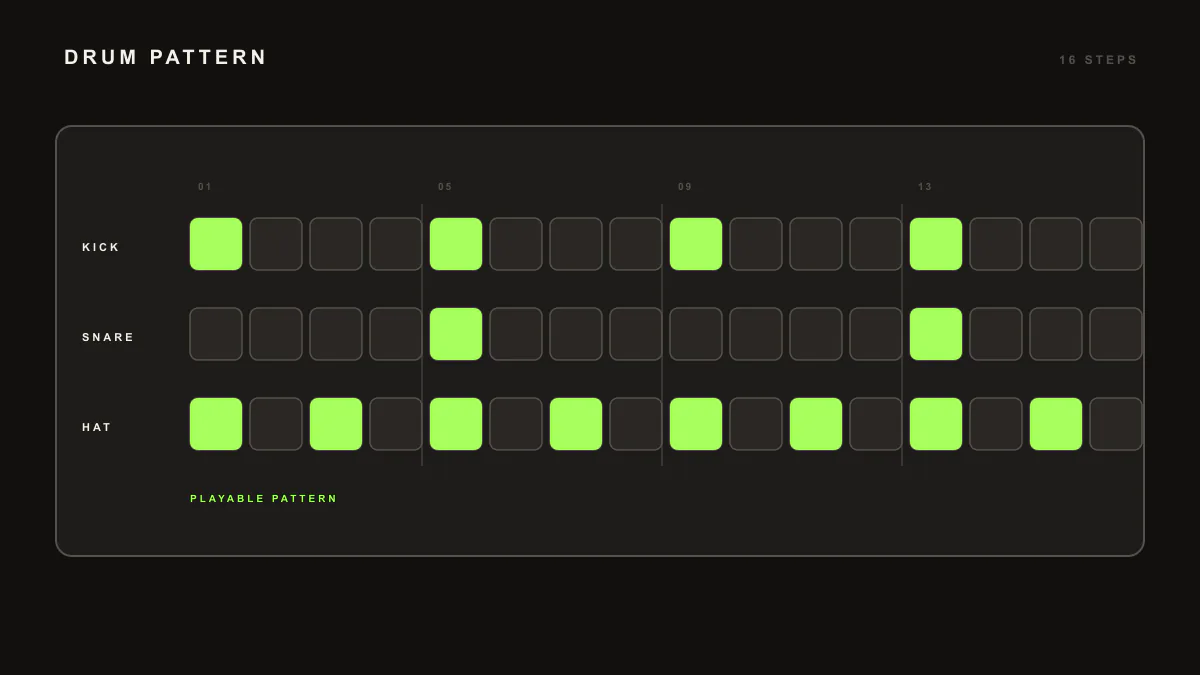
LIA builds drum patterns as editable MIDI inside Ableton Live through LIA Bridge, the small helper app that connects LIA to Ableton Live. Describe the groove through the dedicated drum flow, and kick, snare, hats and percussion land on the grid in a clip you can shape.
Last updated:
LIA builds drum patterns as editable MIDI into your Ableton Live session. Use the dedicated drum flow, describe the groove, and kick, snare, hats and percussion land on the grid. LIA knows the stock kits that ship with Ableton Live, so the pattern can reference sounds you already have. New to LIA? Start with getting started, then connect LIA Bridge, the small helper app that connects LIA to Ableton Live, on macOS or Windows.
Everything here runs in Ableton Live through LIA Bridge on macOS and Windows. Keep the Bridge connected while you work. You talk to LIA from your browser, on desktop or phone.
How it works
- Open LIA in your browser and connect LIA Bridge to Ableton Live on macOS or Windows.
- Ask for a drum pattern through the dedicated flow, naming the style, tempo and feel.
- LIA lays kick, snare, hats and percussion on the grid as editable MIDI, shaped by the genre profile.
- Optionally let LIA pick from the stock kits that ship with Ableton Live, so the pattern uses sounds you already have.
- Open the clip and shape it: move hits, add a busier hi-hat, or ask for a variation to rework it in place.
Example prompts
"Build a heavy techno beat around 128 BPM"gives you a drum MIDI clip with kick, snare, hats and percussion on the grid, ready to tweak."Make a boom bap drum pattern with a swung hi-hat"gives you a swung pattern as editable MIDI, which you can re-voice with your own kit and vary in conversation.
Requirement: LIA Bridge connected to Ableton Live on macOS or Windows. Drum pattern building is available on the Free trial and every paid plan. The stock library scan is part of the paid plans, from Starter up. Free includes 10 total trial productions. See pricing for Free, Starter, Pro, Studio, Studio Max and Founder.
One honest limitation
LIA arranges the pattern as editable MIDI that you voice with your own kits. It does not export audio of any kind, and it does not rearrange or resize clips in the Arrangement view. The groove arrives as hits on the grid for you to shape and arrange.
Related guides
Pair a pattern with a bassline, chord progressions and a melody, or get every layer at once with the beat builder. See how the stock library scan works in stock library scan, and the full catalog in commands.
Frequently asked questions
Can LIA use my own drum kits?
Yes, you can voice any pattern with your own kit by hand. For sound suggestions, LIA works with the stock instruments and drum kits that ship with Ableton Live: the stock library scan is part of the paid plans, from Starter up. See pricing for the plan breakdown.
Can I edit the drum pattern LIA builds?
Yes. The pattern arrives as MIDI on the grid, so you can move hits, change velocities, add a busier hi-hat or an offbeat clap, and refine it in conversation. LIA reworks the groove in place when you ask.
Does the pattern match the genre?
Yes. Name the style and tempo and LIA shapes the drums with the matching genre profile, so a techno beat, a boom bap pattern and a house groove each sit correctly as editable MIDI on the grid.
Do I need LIA Bridge for drums?
Yes, for the pattern to land in your session. LIA Bridge connects LIA to Ableton Live on macOS and Windows. You talk to LIA from your browser, on desktop or phone, and the hits write into the connected session.
Does LIA output audio or MIDI?
Editable MIDI. The pattern arrives as hits on the grid for you to voice with your own kit, not as a finished audio render. Everything stays editable inside Ableton Live.
Next: set up in getting started, browse the full command catalog, or compare plans on pricing.